MUNICIPALITY OF DIEMEN CASE STUDY
FROM 18-MONTH REACTIVE MAINTENANCE CYCLES TO 20-YEAR PROACTIVE PLANNING
SkyGeo measures displacement with millimeter accuracy of every road in the city of Diemen. Maintenance planners receive displacement rates for all neighborhoods, based on satellite recordings since 1992. For the first time, the maintenance planning for roads and sewers is based on a complete set of quantitative data. These data provide new insights. As a result, the city is able to save € 200.000 annually on maintenance expenditures.
Preventing damage due to displacement
The municipality of Diemen is built on very soft soil. Decomposition of peat leads to rapid displacement up to 50 centimeters in 20 years. Differences in soil composition cause the displacement rates to vary drastically between neighborhoods and even within streets. Maintenance is required where displacement exceeds 20 centimeters, the diameter of sewage pipes, which will not drain at this point anymore.
To prevent service interruptions, the municipality has to perform periodic reconstruction and elevation of roads and drainage per neighborhood.

Subsidence in the city of Diemen leads to many inconveniences. But also dangerous situations, like breaking gas pipes.
Scheduling maintenance cycles.
The municipality has an annual budget of € 2,2 million to maintain roads and sewers for its 20.000 citizens. Until now, displacement was measured by visual inspection, which is neither precise, nor repeatable, nor geographically complete.
Differences in displacement rates are difficult to quantify this way, making maintenance either unnecessarily early or to late.
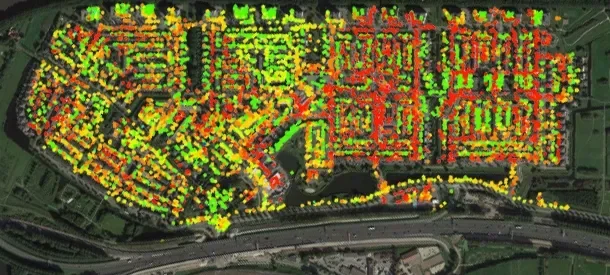
Subsidence Map of Diemen. Subsidence varies drastically from street to street.
Mapping displacement accurately.
SkyGeo uses radar images recorded by satellites since 1992 to determine displacement in millimeters for thousands of locations throughout the municipality. From the resulting map, the city determines the mean time before maintenance of roads and sewers based on extrapolating the long term results to the next 20 years.
Efficient maintenance plans.
Next, Subsidence Map enables the city to accurately calculate maintenance cycles at every level (buildings, streets, neighborhoods). The Subsidence Map shows the dynamics of the displacement, so the city can better prevent possible sewer emergencies.
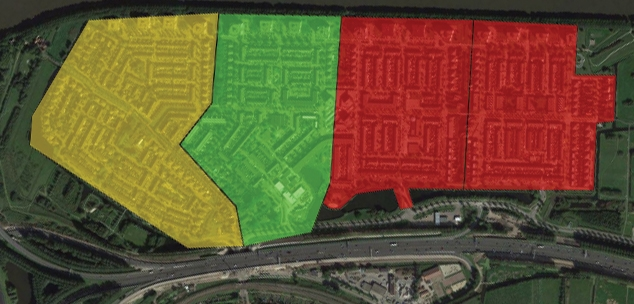
Subsidence Map of Diemen. Subsidence varies drastically from street to street.
Aggregation of displacement data from picture above. The 20 percentile points are converted to a map with an indication of the mean time before failure in years.
Better expenditure allocation.
The Subsidence Map also suggested that maintenance can be safely postponed in many neighborhoods. This leads to considerable savings in annual maintenance expenditure and a reduction of impact of construction work in the neighborhood.
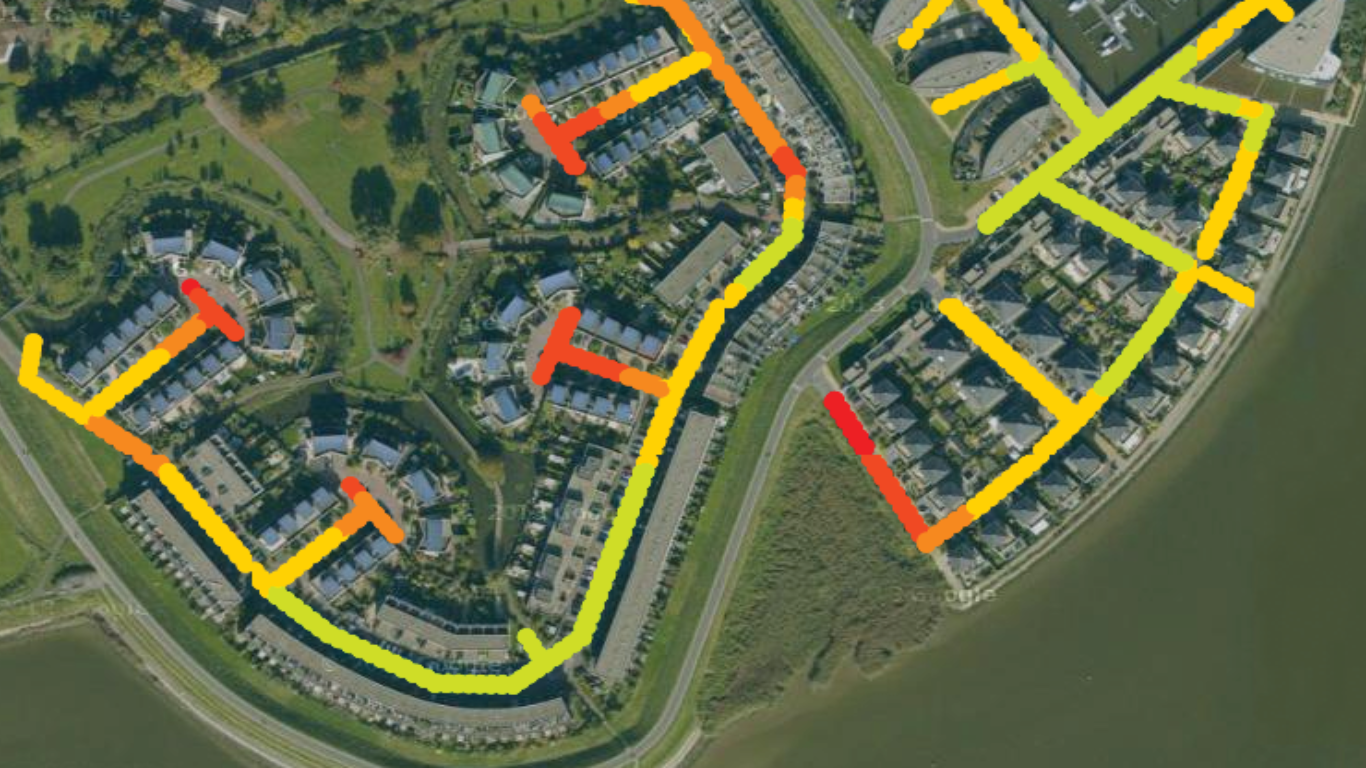
Differential settlements in a sewage system by projection of displacement data on the pipelines.
The Bigger Win
Diemen proved that when you apply InSAR assesstment, maintenance stops being a guessing game. With a citywide, millimeter-accurate subsidence record back to 1992, planners now forecast 20-year maintenance horizons instead of reacting every 18 months.
The result isn’t just cleaner data, it’s €200,000 in annual savings, and fewer emergency digs, protecting service continuity in a soft-soil city where peat can drive 50 cm of settlement in two decades. It’s a scalable template for any town managing tight budgets, aging utilities, and variable ground conditions.
Ready to put time on your side? SkyGeo is ready to assist your, or any other location, talk to our team, today.
Civil Engineering Case Studies
-
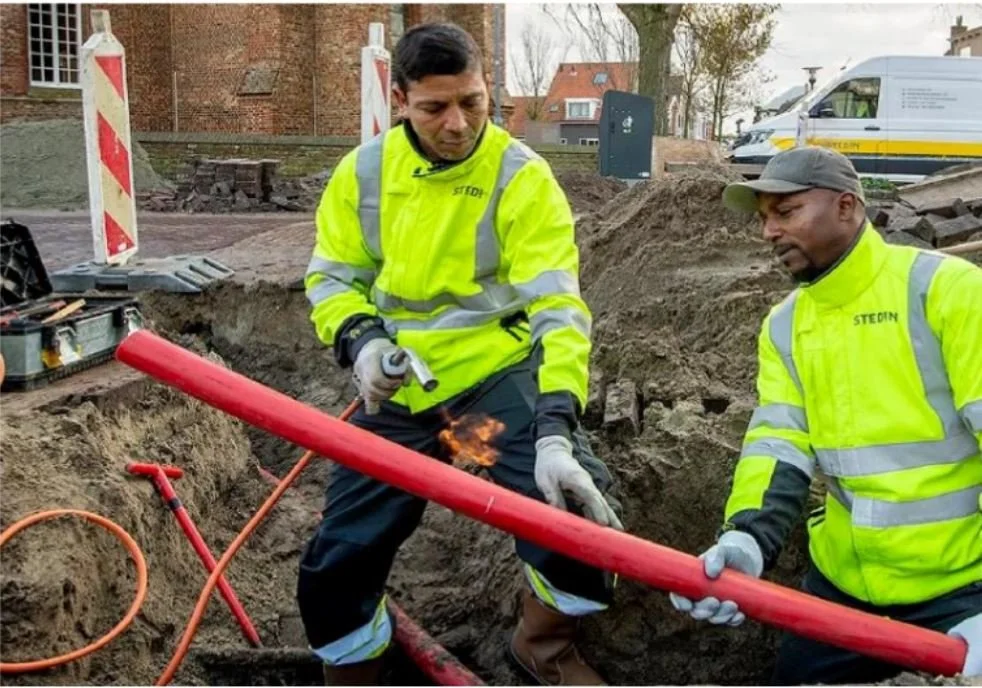
Stedin NV
By implementing our risk assessment experience, Stedin NV can now target only the service lines that are truly at risk, reducing costly investment and optimizing their maintenance workflow.
-

City of Rotterdam
We can help cities everywhere to prevent damage before it happens, by using InSAR and analyzing these deformations with millimeter precision.