

THE INSAR INTELLIGENCE PLATFORM FOR CIVIL ENGINEERING
OUR CIVIL ENGINEERING CLIENTS



































InSAR Monitoring for civil engineering projects
Let SkyGeo configure an InSAR Monitoring solution for you – with millimeter accuracy, up to 25 years back in time and 100,000’s measurement points per km², each with a graph of displacement over time. SkyGeo data is often the best predictor for mean time before failure of the assets. Risk management practitioners use this for predictive maintenance.
Site Selection
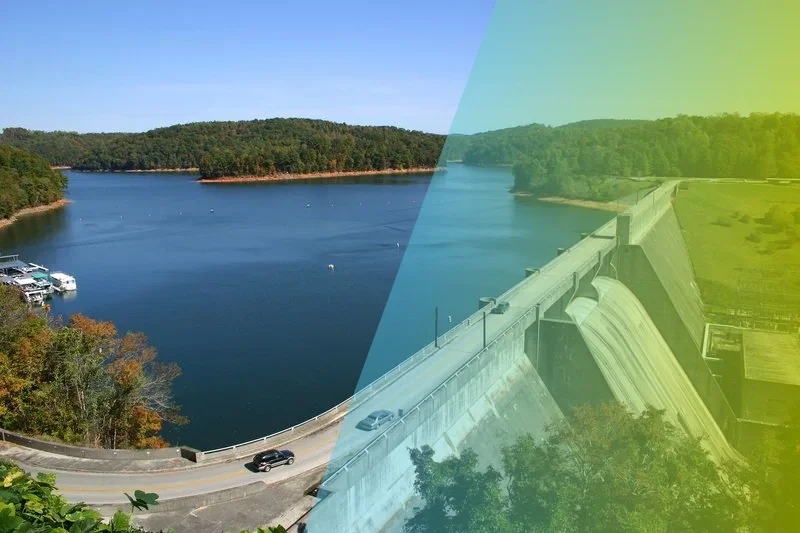
Determine existing surface motion during site selection processes. Support the design and the optimisation of the ground instrumentation network.
SkyGeo provides unique support in reconstructing past ground motion patterns, which could potentially affect constructions.
Using a historical archive of satellite imagery, SkyGeo can identify unstable areas prior to construction and reconstruct their displacement to assist in the planning of new sites.
Monitoring with satellite data minimises survey time and cost compared to traditional measurement techniques.

Development
Monitor impact of construction activities on nearby buildings and infrastructure.
Complement traditional monitoring by extending motion measurements to a wider area.
Solve model uncertainty. The density and precision of measurements can be used to verify model predictions of ground displacement.
By mapping the evolution of ground displacement during construction, engineers can better understand the relationship between activities and the onset of any related settlement.
SkyGeo offers thousands of measurement points over large areas, at a fraction of the cost of traditional monitoring.
It also increases displacement information beyond excavation surroundings, to determine the extent of any displacement occurring within a wider area.
Maintenance
Assess the stability of assets over time to monitor that displacement remains within design parameters.
Control impact on assets of displacement occurring in adjacent areas.
Regular monitoring of post-construction displacement can identify structural weaknesses.
Identifying motion that could indicate a structural weakness helps engineers to determine if actions should be taken.
Moreover, InSAR Monitoring provides displacement maps to assess areas at risk.
Case Studies
-
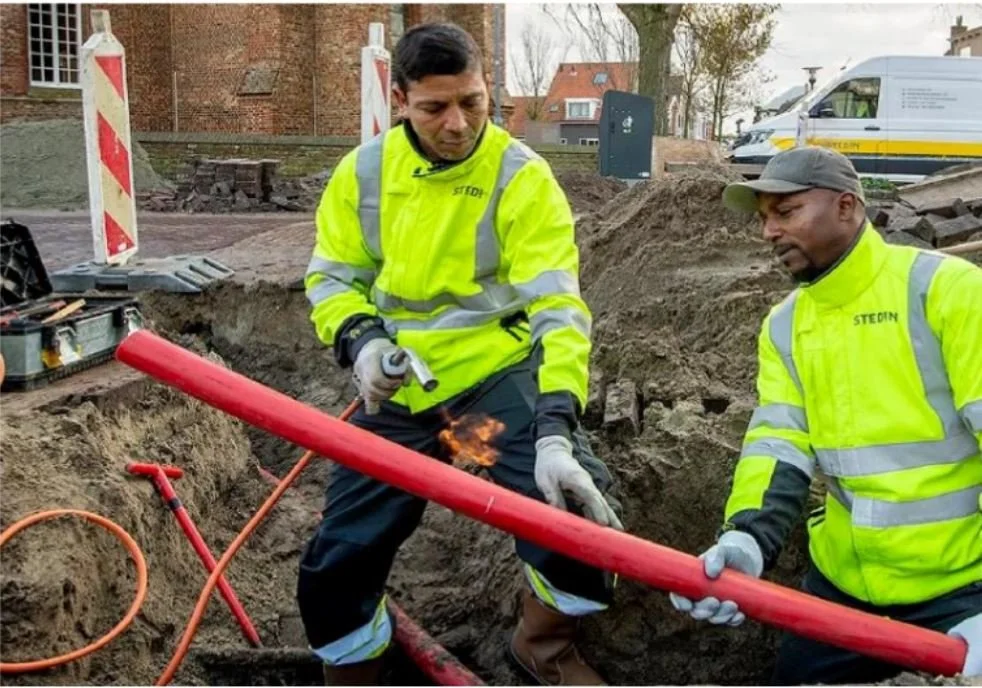
Stedin NV
By implementing our risk assessment experience, Stedin NV can now target only the service lines that are truly at risk, reducing costly investment and optimizing their maintenance workflow.
-
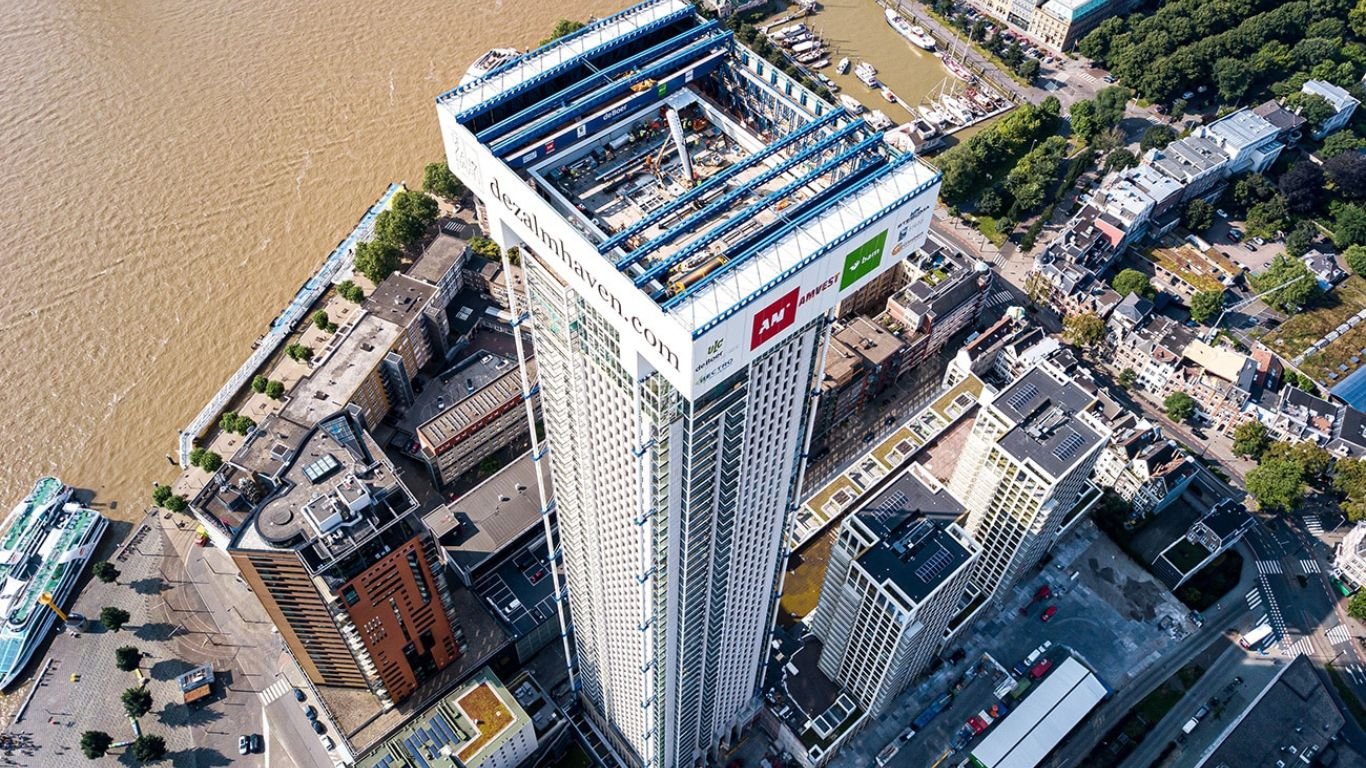
City of Rotterdam
We can help cities everywhere to prevent damage before it happens, by using InSAR and analyzing these deformations with millimeter precision.
-
City of Diemen
“Problems we had for years with manual measurements were resolved at once.”
Our Infrastructure Clients

Frequently Asked Questions
-
InSAR supports risk-based maintenance by showing where ground or asset movement is changing across a portfolio. SkyGeo combines repeated measurements with historical behaviour and asset context so teams can rank locations for inspection, additional monitoring or maintenance review. It does not predict every failure; it improves the evidence available for deciding where limited engineering and maintenance resources should be focused.
-
Historical InSAR shows whether movement is new, seasonal, persistent, or long-running. SkyGeo uses that time depth to support better decisions on site selection, design assumptions, construction impact, and long-term maintenance planning.
-
InSAR can be applied to a wide range of infrastructure and the ground it depends on. It is especially useful where movement is gradual and distributed across an area. SkyGeo supports roads, rail, utilities, pipelines, buildings, embankments, ports, and other infrastructure affected by settlement or structural movement.
-
Time-series deformation trends can support proactive maintenance planning by highlighting where movement is accelerating or spreading. This helps teams prioritise inspections, allocate budgets, and reduce the chance of costly surprises.
-
Often yes, but interpretation requires care because buildings, vegetation, and construction activity can affect signal quality. A reliable approach includes quality controls and expert interpretation to avoid incorrect conclusions.
-
For large infrastructure portfolios, the most robust approach combines wide-area InSAR with targeted ground monitoring and inspection. InSAR can show displacement history, rate and spatial pattern where measurement quality is suitable; asset engineers then interpret that movement alongside design, geology, loading and local observations. This creates a layered monitoring strategy rather than relying on one sensor or one threshold for every asset.
-
Item descriInSAR can support early awareness when a time series shows movement that is new, persistent, accelerating or spatially unusual. It should not be treated as a universal failure-prediction system. The responsible workflow is to compare the signal with the historical baseline, check data quality and context, and define site-specific thresholds for review, inspection or additional monitoring. Consequence and asset tolerance determine what action follows.ption
-
Raw InSAR data tells you where measured surface movement appears in the dataset. Decision-ready monitoring adds quality control, uncertainty, historical context, asset context, interpretation and an agreed response workflow. SkyGeo’s role is to help teams decide which patterns matter, why they warrant attention and what should happen next: no action, continued observation, targeted inspection, additional instrumentation or engineering review.
Let Us Know How We Can Help You
info@skygeo.com