

Shell Brunei Case Study
InSAR deformation monitoring for onshore and offshore areas in Brunei
Brunei Shell Petroleum (BSP) has worked with SkyGeo in acquiring and implementing InSAR data as an operational tool since 2014. In 2025, we launched an initiative to accelerate the use of InSAR monitoring updates for offshore and onshore, which we now do quarterly.
The results are derived from 3 frames of high-resolution TerraSAR-X data, as well as standard-resolution Sentinel-1. The rates of subsidence we observed, validate well against the GPS data. Offshore GPS suffers from very high attrition rates and is uneconomic for multiplatform use. With InSAR we can provide cost savings by remotely monitoring a large number of platforms.
For this we had to successfully address a major processing challenge over water which is the loss of correlation of the InSAR network, especially over longer arc lengths. For this difficult technical challenge, we had to thoroughly understand every line of code and optimize the SkyGeo processing chain.
Referencing with leveling data generated some real discrepancies. From carefully observing the patterns vs. our InSAR results, we were able to conclude that the reference point of the conventional leveling measurements had been moving by several centimeters over the course of the observation period.
The data is used to determine changes in topography patterns and their impact on surface facilities locations and thus provide input to (offshore) facilities upgrades. Local surface changes related to shallow integrity can also be monitored. The movements of the measurement targets are representative of the deformation signal of interest.
We perform our standard QA process on all images and products. We log and document all of our processing steps and intermediate results, working in full compliance with the Geomatics Technical Specification Document number TS-015 rev. 3: “InSAR Geodetic Deformation Monitoring”.
We have been working directly with the geomechanics team on all of the large offshore fields to help them constrain their geomechanical model. This validated model predictions / data packages were then provided specifically to support reservoir engineering in production decisions.
Also, SkyGeo has done a full multiday course 3x with BSP: on-site training twice and remote once. Ongoing remote training semi-annually to BSP staff is part of the work.
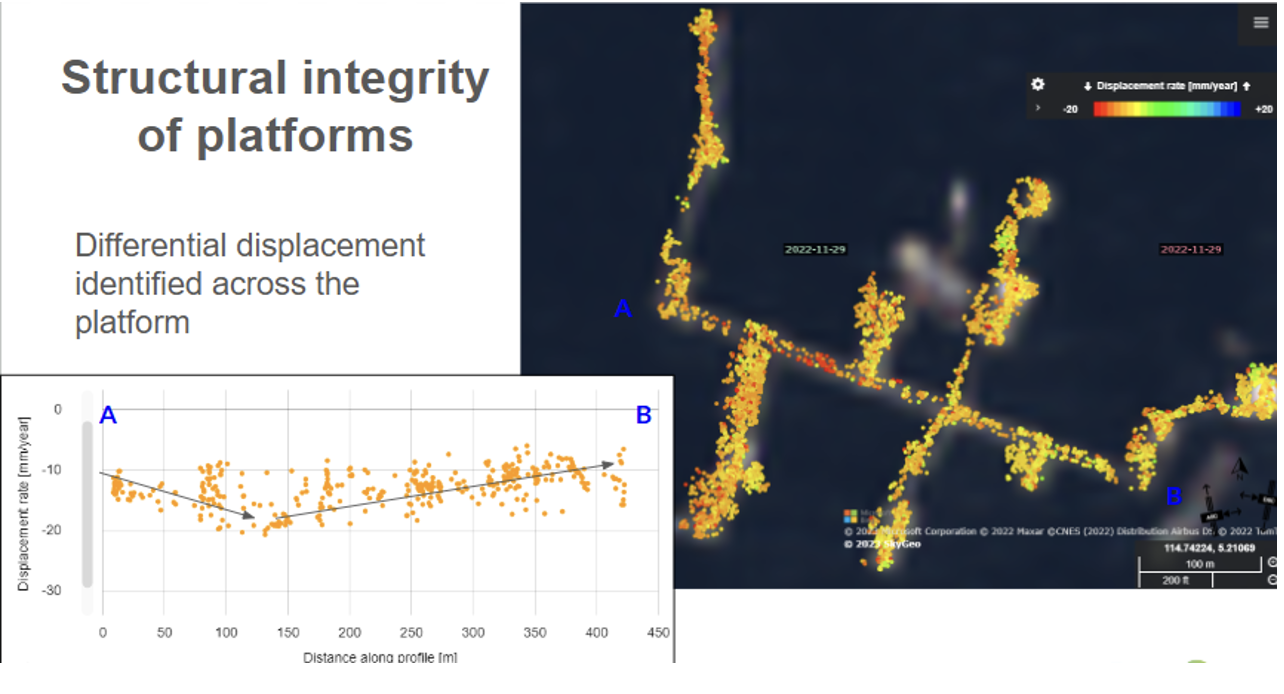
Fig. Example of TSX-derived InSAR deformation map of a platform. Used for assessing structural integrity. Over a wider area and across a large population of dozens of platforms, we use this data for validating and constraining geomechanical models.
Oil & Gas Case Studies
-
Berry Petroleum
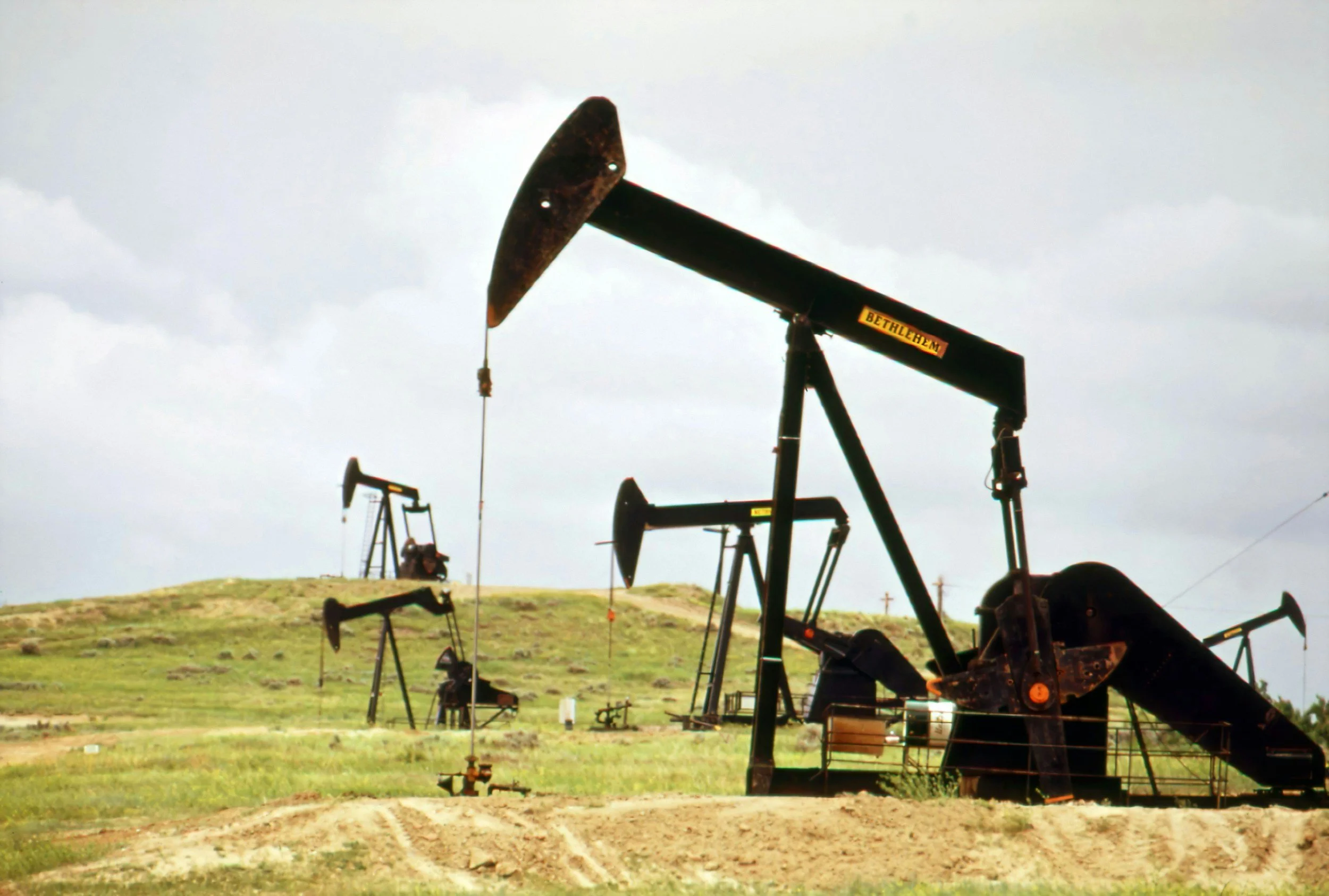
Using frequent InSAR monitoring, Berry Petroleum can identify subsidence and uplift patterns across its fields, allowing engineers to fine-tune injection strategies and reduce the risk of well damage and environmental incidents.
-

NAM
Through long-term InSAR monitoring across the Groningen region, NAM gains detailed insights into subsidence and reservoir behaviour, supporting seismic risk assessment and regulatory reporting.





Frequently Asked Questions
-
InSAR can remotely measure millimetre-scale ground or structural movement across large offshore areas using satellite radar data. This makes it possible to monitor multiple platforms simultaneously without installing equipment on each structure. For offshore assets where GPS sensors are expensive or difficult to maintain, satellite monitoring provides a cost-effective way to track subsidence and detect changes that may affect structural integrity.
-
InSAR measurements are routinely validated against ground-based instruments such as GPS and levelling data. In many projects, the deformation patterns measured by satellite correlate closely with GPS measurements, providing confidence in the results while covering a much larger area at lower cost.
-
Deformation monitoring provides insight into how subsidence or surface changes may affect offshore facilities. These insights can be used to improve geomechanical models, guide infrastructure upgrades, and support reservoir engineering decisions related to production planning.