
Berry Petroleum Case Study
Fine-tuning Water and Steam Injection in EOR Diatomite Project, Bakersfield, California (USA)
Our customer continuously adjusts water injection for over 500 producer and injector wells to minimize the risk of both well casing damage and surface spills. SkyGeo has been delivering an operational InSAR service using TerraSAR-X and repointing every 11 days over a growing number of leases - now up to 22.
With these measurements of induced subsidence and uplift, we effectively help identify locations of over-, or under-injection continuously. And we help predict and prevent a whole series of environmental problems.
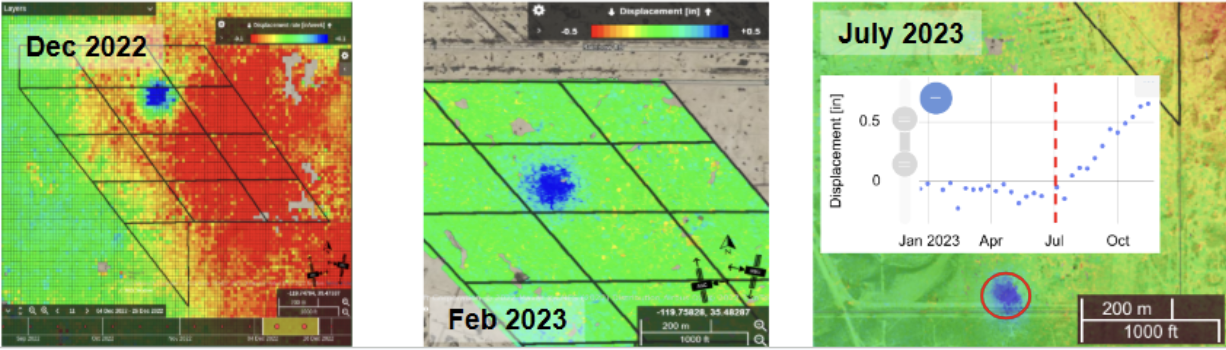
Figure 14: Samples of the SkyGeo surface subsidence and uplift map over the diatomite. For 30,000 points per square mile, we show how much the surface has gone up or down in the last 11 days. Production causes regional subsidence (red) whereas overpressure causes uplift locally, typically with a circular footprint (blue). This dynamic view of surface motions is translated into insights about excessive subsidence or uplift. Production engineers adjust the flow rate settings on the water injectors to mitigate these effects. Blue "blisters" are clearly visible.
Waterflooding diatomite
Our customer operates a series of on-shore leases. The most challenging ones are diatomite field with hundreds of vertical production wells. Extraction from the high porosity, low permeability diatomite payload causes compaction, production loss and well casing damage.
We have helped build a feedback loop to reduce subsidence from 30 cm/yr to < 10 cm/yr, thereby extending the mean time before failure of all wells. Production-induced well casing damage is a major factor affecting the field’s economics: hundreds of wells have already been decommissioned since the start of production.
Measuring subsidence and uplift
The fluid displacement (and replacement) can be deduced from the SkyGeo surface deformation maps: we produce same-day measurements of subsidence / uplift response above ground every 11 days for all leases. d apply the InSAR technique to update reservoir engineering with information about surface motions.
oil-to-surface have highly negative effects: shutdown and fines by the state of California. But they are hard to measure and hard to predict. Prior to actually surfacing, the fluid “pushes up” the rock above. The typical uplift pattern in the InSAR measurements is distinctly circular (blue in the figures), guiding where flow rates can be reduced. Surface events are infrequent but costly, and now there is a better way to prevent them.
Response: fine-tuning water injection
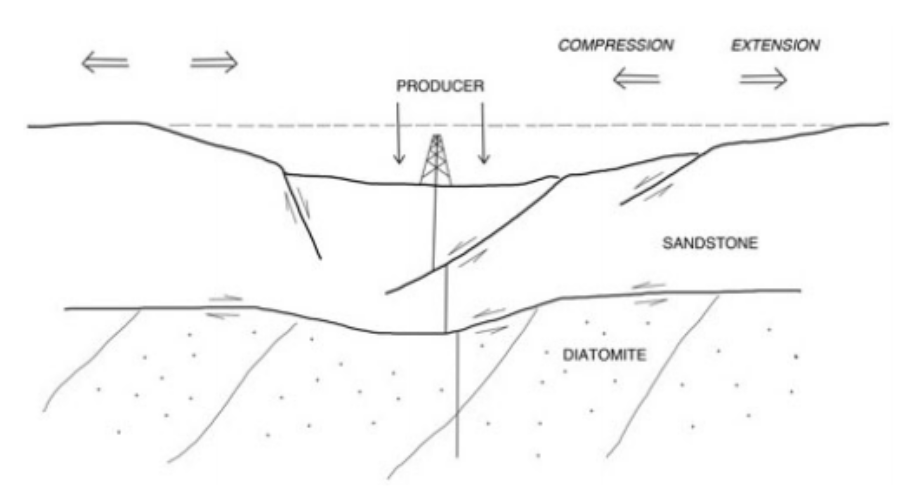
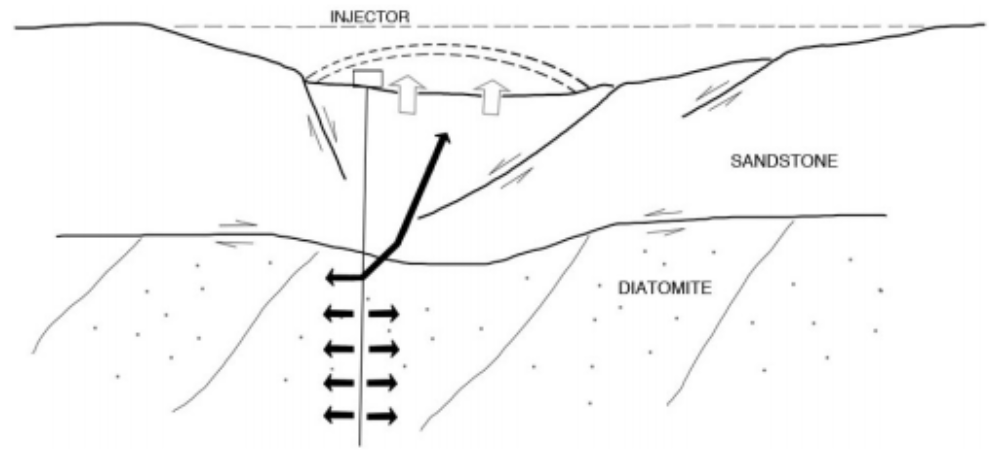
Figure 15: Compaction in the diatomite and associated well casing damage patterns. Most damage happens where shear stresses are largest: at the non-conformity between the diatomite and the overlaying sandstone. LEFT. Effective waterflooding strategies mitigate the effect that compaction in the payzone has on well casing and allow for long term stable production. RIGHT. InSAR indicative of excessive pressure typically presents as a circular uplift pattern AKA a blister at the surface. Leaking wellbores cause oil-to-surface events - but we now prevent them with 100% success.
Post time series: Cumulative Sum
The opposite of smoothing changes matter
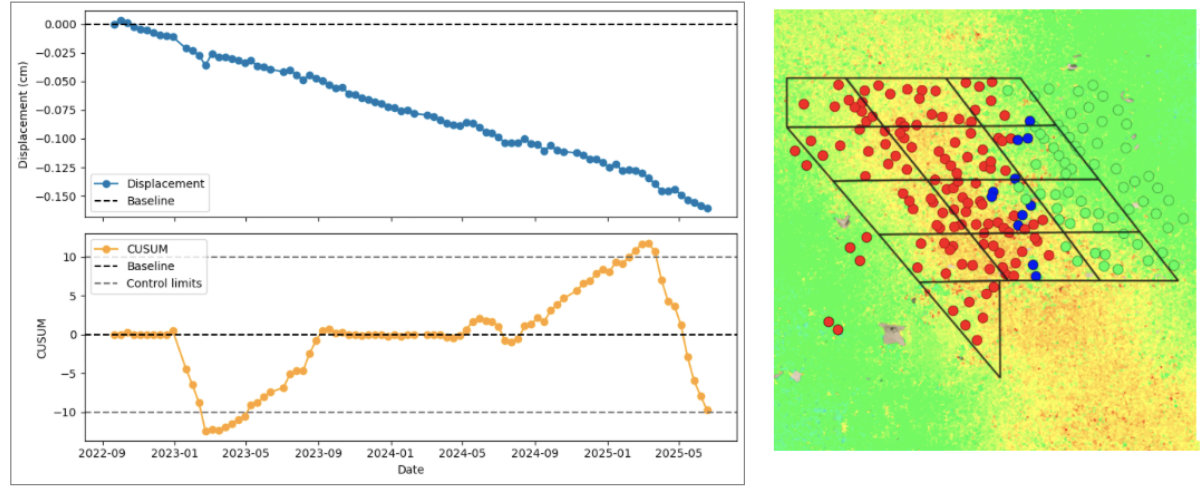
Figure 16: LEFT TOP in Blue time series showing vertical subsidence data over 2+ years for an individual injection wellbore. Subsidence is steady over time. LEFT BOTTOM In orange the cumulative sum product derived from the time series, to highlight small deviations from a background subsidence signal. Where well is shown in red, Cumulative is <0, the three is a downward deviation from the steady trend. On the RIGHT we show wells deviate for a certain time. We can appplpy similar to any well or cluster of wells for PDO.
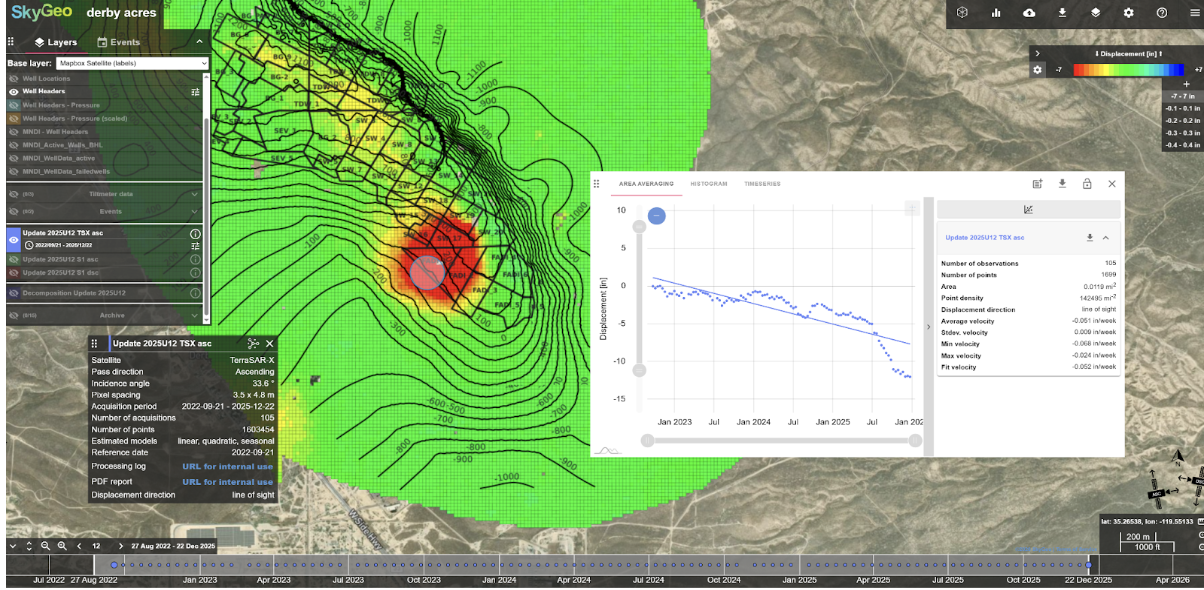
Figure 17: Steam flood in diatomite. Showing the top of the formation in black contour lines. Time series showing vertical subsidence data over 2+ years for a well pad. The total subsidence is 28 cm and accelerating. This TSX InSAR data is updated and reviewed every 11 days.
All in all, with Berry we have incrementally grown the number of users working with the InSAR data, trusting it to inform their day-to-day work. We now provide corporate visibility on the effectiveness and Return on Investment of the service.
We have increasingly gotten better at understanding the inversion of the surface data semi-quantitatively to help the reservoir and asset managers take real decisions. We meet with several asset teams and help them in their work every month.
Why SkyGeo?
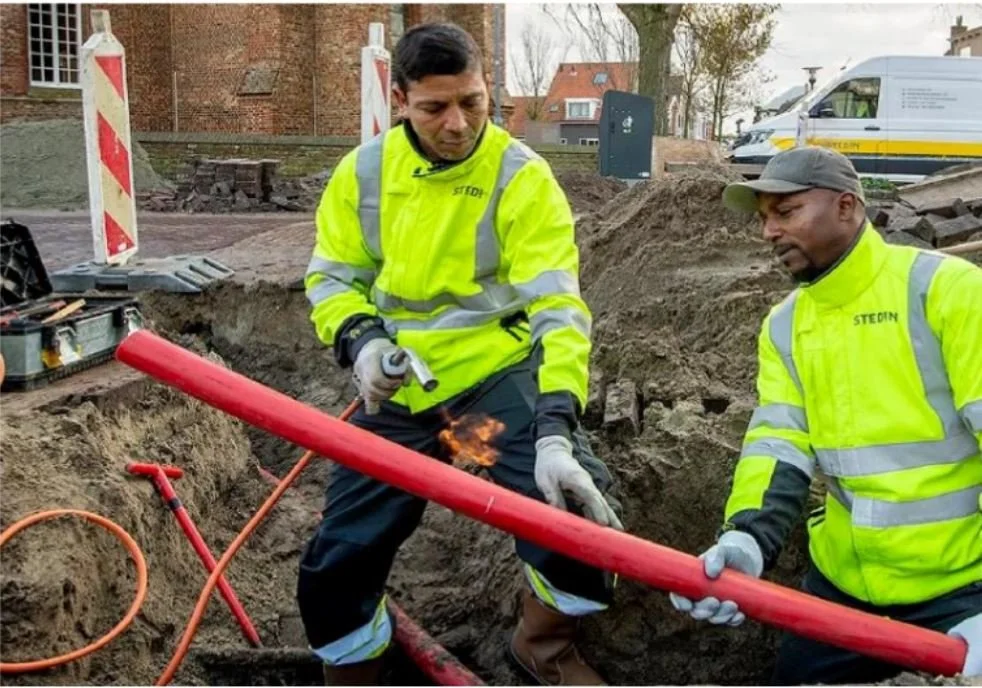
Stedin’s experience shows what happens when you stop digging in the dark and start planning with evidence. By pairing door-by-door InSAR displacement mapping with existing GIS and field workflows, they shifted from blanket replacements to risk-based maintenance that actually mattered, cutting unnecessary excavations, and saving thousands of euros while improving reliability in soft-soil suburbs.
If you operate a gas network in subsiding cities, this is the blueprint: high-resolution satellite displacement monitoring, translated by SkyGeo’s experts into actionable, street-level risk that planners, asset managers, and crews can use every day.
Let’s map displacement risk across your service area and build a maintenance plan together. Contact SkyGeo for a tailored risk solution to your network.
Civil Engineering Case Studies
-
Stein NV
By implementing our risk assessment experience, Stedin NV can now target only the service lines that are truly at risk, reducing costly investment and optimizing their maintenance workflow.
-
City of Rotterdam
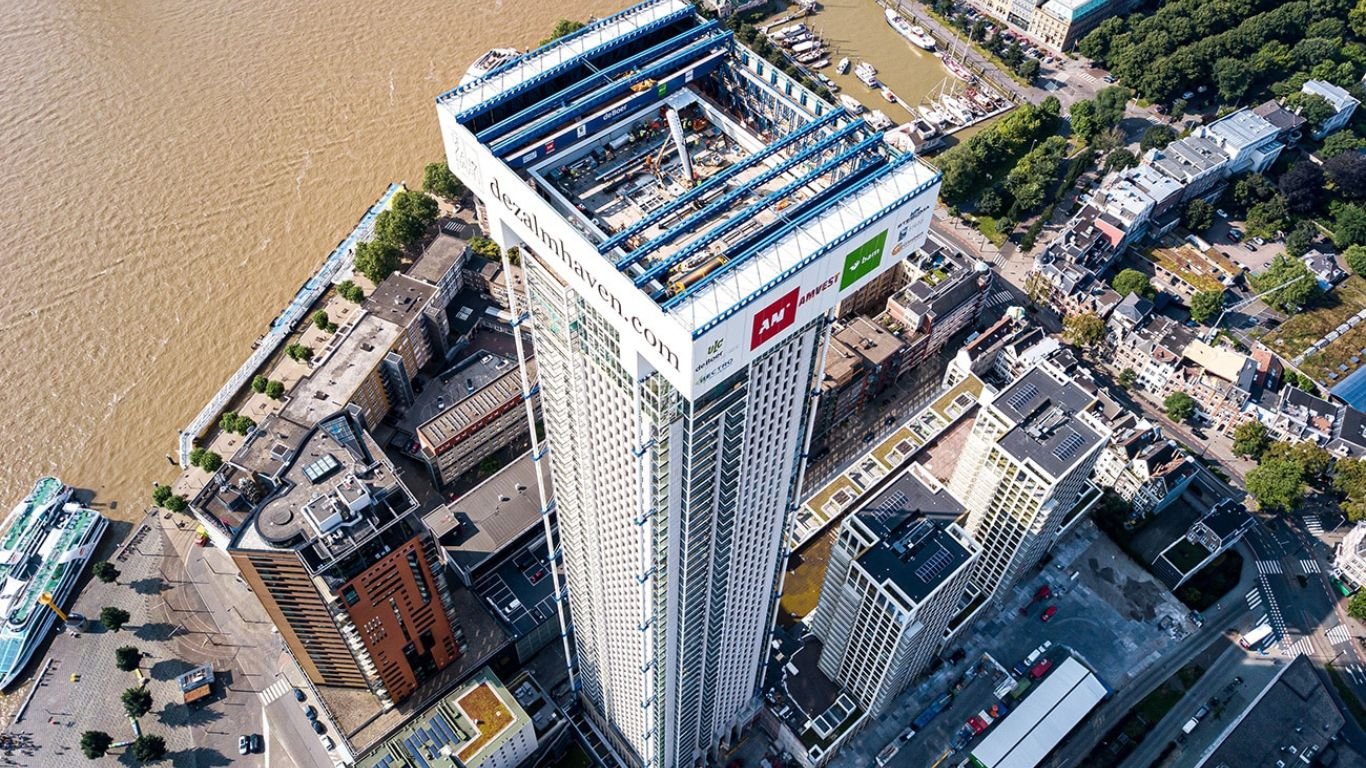
We can help cities everywhere to prevent damage before it happens, by using InSAR and analyzing these deformations with millimeter precision.
-
City of Diemen
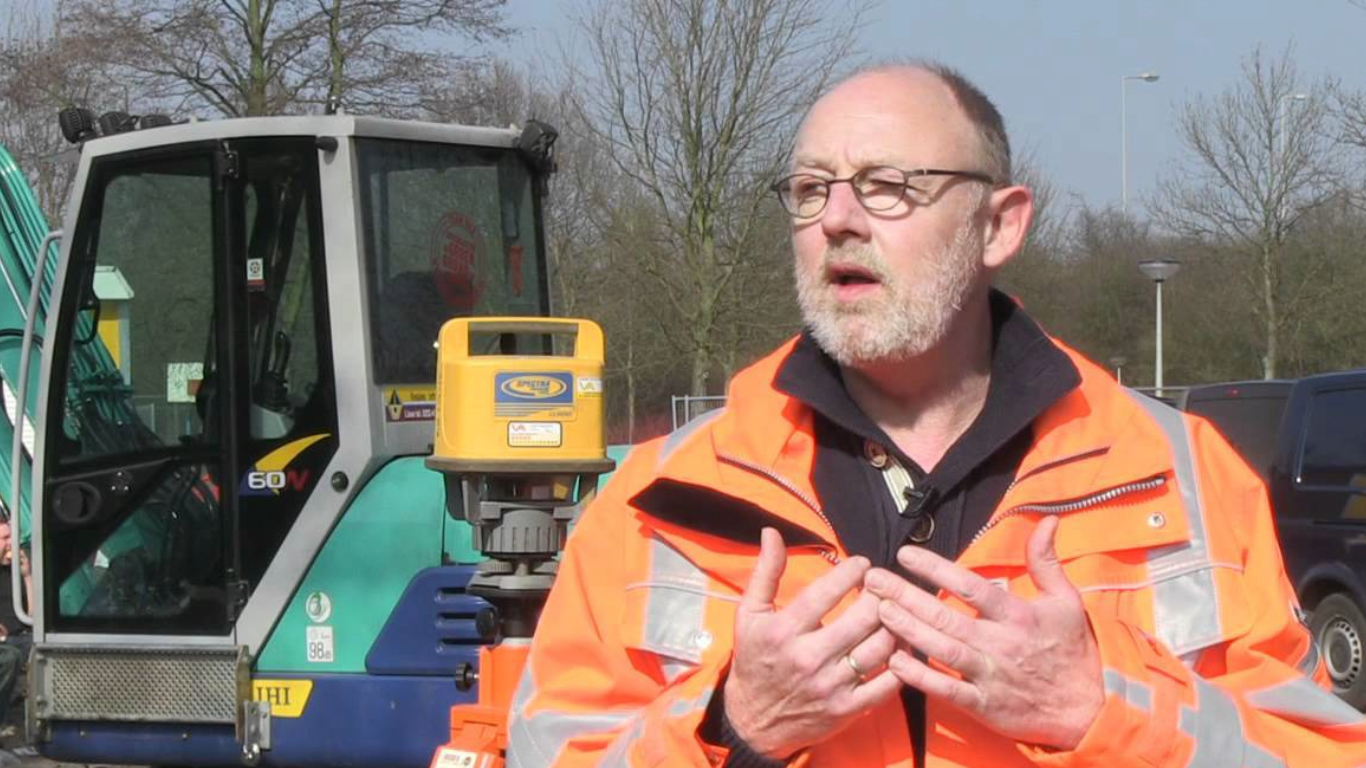
“Problems we had for years with manual measurements were resolved at once.”




















Frequently Asked Questions
-
Case studies should explain the problem, monitoring approach, validation steps, and the decisions enabled—so readers can judge credibility and applicability to their own assets.