
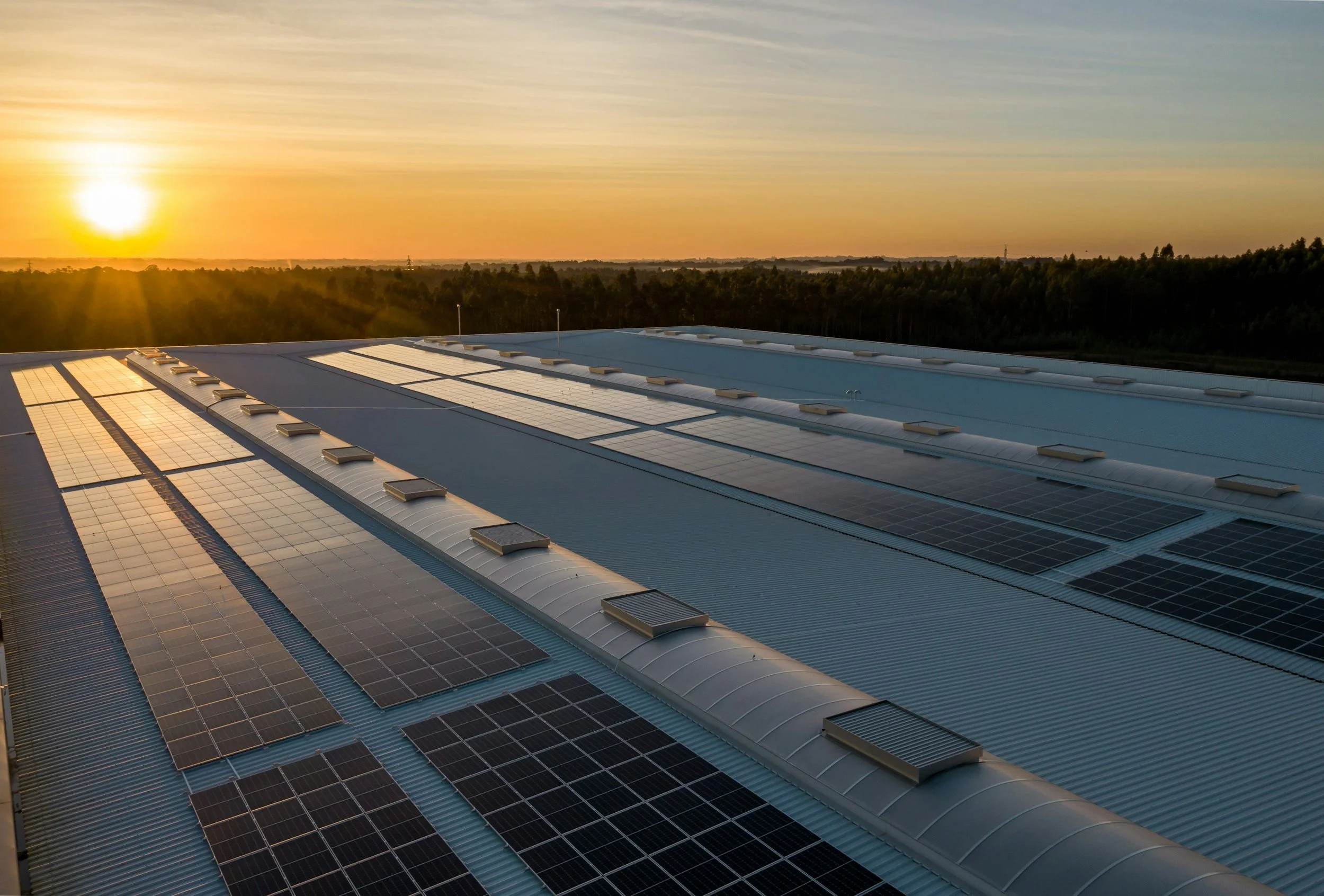
Solar developments depend on foundations, access tracks, cable routes and drainage spread over large areas. A site with a history of uneven settlement can raise design and maintenance questions even when the land looks level. A historical InSAR review can reveal broad uplift or subsidence around a prospective solar farm, compare candidate areas and show where extra ground investigation would be prudent.
Site selection starts with the land
Solar projects need suitable ground for foundations, roads, inverters, cable routes and drainage over a long operating life. Historical settlement or differential movement may point to the need for deeper ground investigation, especially on reclaimed or former industrial land.
InSAR reveals historical movement wherever suitable radar targets exist. Open farmland can provide fewer or seasonally variable measurements, so coverage is checked carefully and gaps are filled with conventional surveys.
Use a staged development assessment
At the option stage, review available archives alongside geology, groundwater, previous land use and engineering surveys. During design, focus on areas where foundations, electrical equipment or access routes may be sensitive to differential movement. Combine the movement record with boreholes, soil data, earthworks plans and the proposed layout.
During construction, keep a baseline where the ground remains observable, as major earthworks may require a new one. Once the farm is operating, ground movement can be reviewed as part of the wider maintenance program, particularly around substations, roads and drainage.
Connect the findings to project decisions
A developer may investigate a particular area more thoroughly, refine foundation designs or adjust drainage plans. The output should describe the measured trend, any observation limits and the specialist evidence still needed. Solar site selection involves many other factors, including planning, grid connection and environmental considerations, and ground movement history is a valuable input among them. Read more in our article on solar farm ground settlement and on InSAR for the energy industry.
Frequently asked questions
-
Long-term ground movement across the proposed array area and access corridors.
-
Geotechnical studies, groundwater, site grading and foundation plans.
-
It can be limited or vary with the seasons, so coverage is assessed for each site and supplemented where needed.
-
Before site selection, with new monitoring defined for construction and operation.
-
Compare the available movement record across your shortlisted project footprints.
