
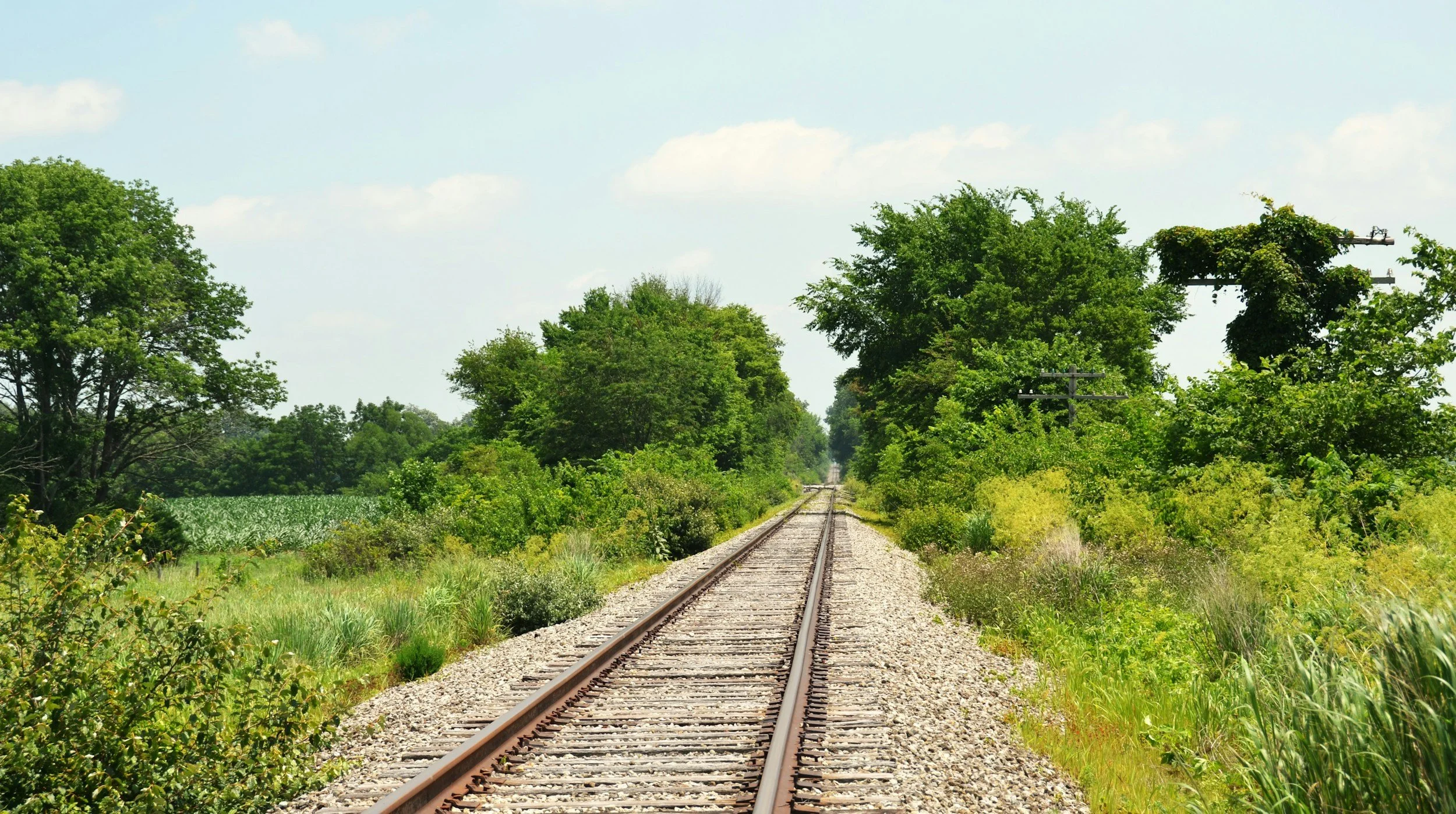
Rail embankments can respond to groundwater changes, drainage problems, consolidation or works near the route. A small long-term settlement trend can matter where tolerances are tight. InSAR helps maintenance teams see these trends across entire corridors and decide where to investigate, while track geometry and safety remain governed by rail standards and established procedures.
Read movement in the context of the railroad
InSAR shows how visible parts of earthworks and nearby structures move between satellite passes. A historical series puts a newly observed change in context, which is especially useful where a corridor crosses soft soils or former mining ground.
An embankment's behavior depends on its material, drainage, foundation soils, loading and maintenance history. A point on a nearby building does not necessarily reflect what is happening beneath the track, and points on ballast or vegetation may be less reliable. The key question is whether a persistent pattern on measurable parts of the earthwork lines up with a change in track geometry, a wet cutting, blocked drainage or a known weak spot.
A practical corridor review
Divide the route into sections engineers recognize, such as approaches, cuttings, embankments and transition zones. Compare satellite histories with track geometry runs and repeat leveling for the same dates wherever possible. Focus on sustained differential movement rather than treating every millimeter of displacement as a defect.
Where recent earthworks have changed the surface, note any gaps in the radar record and allow time to build a new baseline. Teams should also separate gradual settlement from hazards that need immediate operational monitoring.
Deciding on the next intervention
A credible trend can justify a drainage inspection, a repeat topographic survey or additional instruments. More intensive monitoring makes sense when movement is accelerating, the structure has little tolerance, or field evidence points to an active mechanism.
InSAR gives the asset manager a wider historical picture, so interventions are based on evidence rather than a recurring defect report alone. Learn more about InSAR for civil engineering and infrastructure and our article on railroad settlement monitoring.
Frequently asked questions
-
Settlement patterns around embankments, cuttings, bridge approaches and nearby structures, with a history that often goes back many years.
-
Track geometry data, drainage records, leveling and geotechnical instrumentation for the same locations and periods.
-
No. It measures ground and structure movement. Track geometry is measured with dedicated rail surveys, and the two together give a fuller picture.
-
In line with the maintenance cycle and the risk of each section. Short-timescale hazards are covered by local monitoring.
-
With a section that has known earthworks issues, comparing its movement history with past maintenance dates.
